Insights from the field
Product updates, Nigerian real estate industry commentary, and practical guides for running a leaner sales operation.

Nigeria's Two-Speed Property Market — and What It Means for Operators
If you operate in Nigerian real estate right now, you're working in what has effectively become two different markets — and the gap between them is widening.

The State of Nigerian Real Estate Operations 2026
Nigeria's real estate sector is enormous, growing, and beneath the headline numbers; running on operational foundations that would alarm most people if they looked closely.

You Should Never Feel Stuck
You can build the most powerful platform in the world, but if a user hits a question at 4pm on a busy day and has nowhere to turn — no clear way to ask, no quick answer, no sense that anyone's listening — then all that power sits behind a wall of frustration.

The New Lagos Buyer
Something has shifted in the Lagos property market, and if you sell real estate, you've probably already felt it — even if you couldn't quite name it.

Beyond the Spreadsheet: Software for Nigerian Real Estate Sales
Almost every real estate company in Nigeria runs on a spreadsheet at some point. And for a while, it genuinely works.
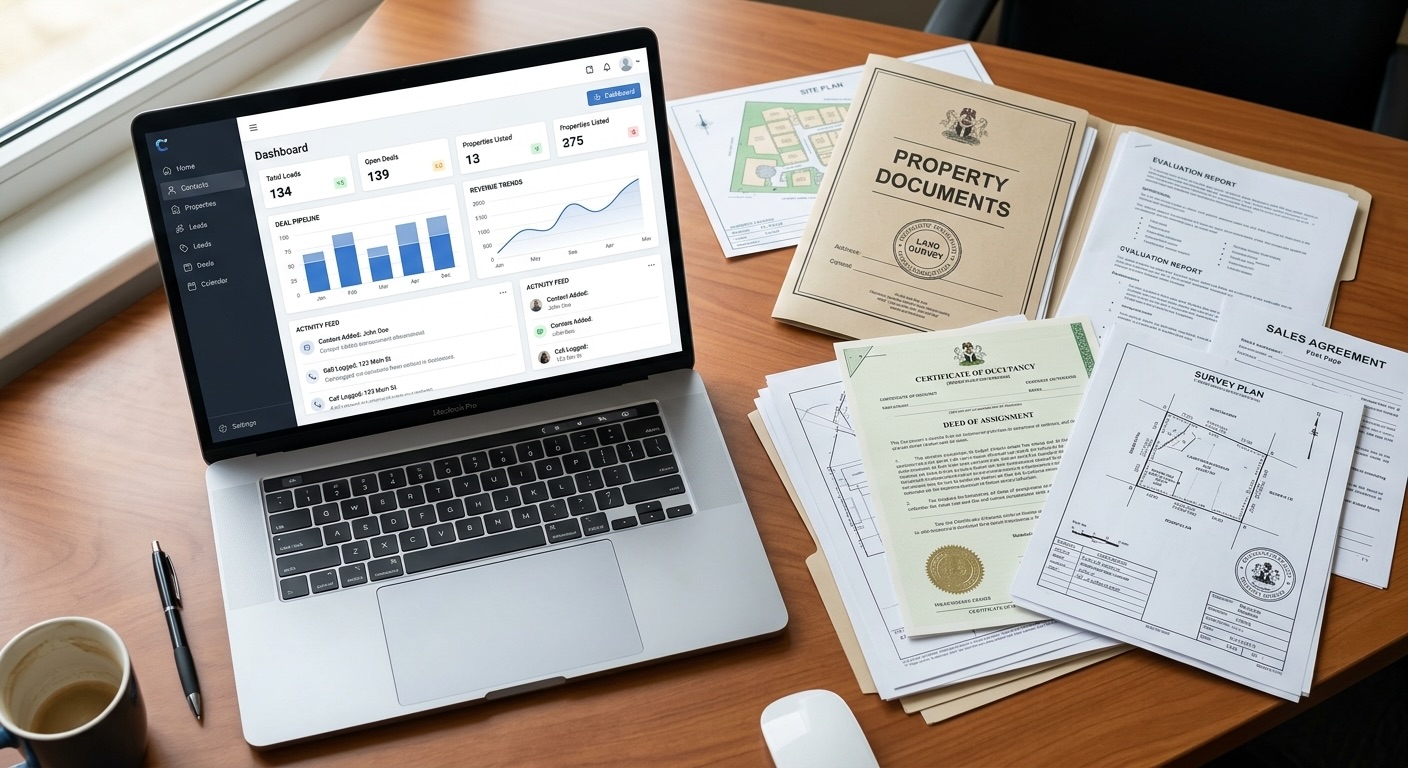
The Best HubSpot Alternative for Nigerian Real Estate Developers
If you run a real estate company in Nigeria and you've tried to run it on HubSpot, Salesforce, Zoho, or any of the global sales CRMs, you already know the feeling.

The Prospects Who Were Going to Buy and Didn't Show Up
He'd seen the property, asked good questions, liked the price. When Emeka suggested an inspection, he said yes immediately - Saturday morning, he'd be there.

The Deal That Broke a Realtor Community
Realtors don't leave communities primarily over money. They leave over feeling treated unfairly.

Reporting Tells You How You Did. Steering Tells You What to Do.
There are two ways a business can relate to its own data, and the gap between them is the gap between the companies that grow and the companies that merely survive.

Lagos Just Made Manual Building Approvals Illegal
If you develop, sell, or build property in Lagos, something changed that you need to understand properly.

The Money You Already Sold
Every real estate company running installment plans has two completely different businesses inside it, and almost all of them only manage one.

The 200 Realtors Who Aren't Selling
There's a rule of thumb worth internalising: when a group of motivated people consistently underperforms, look at the system before you look at the people.