Nigeria's Two-Speed Property Market — and What It Means for Operators
Joshua Daniel · Marketing Comms
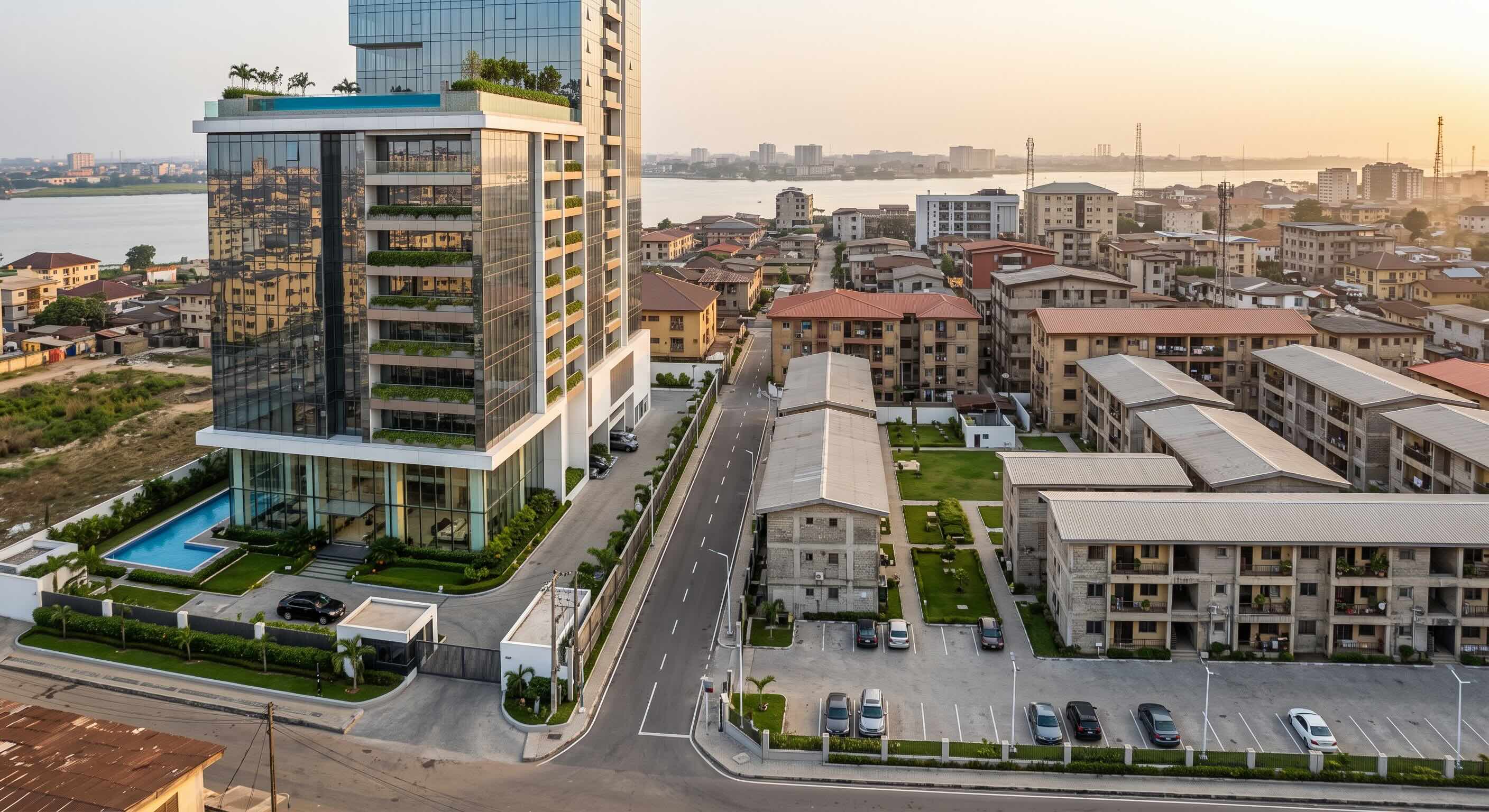
Luxury is booming, the mass market is squeezed, and the winners will be decided by operations
If you operate in Nigerian real estate right now, you're working in what has effectively become two different markets — and the gap between them is widening.
At the top, the numbers are staggering. Luxury real estate in Lagos has surged, with prime assets in elite neighbourhoods more than tripling in value over the past year, and properties in Ikoyi recording appreciation rates between 132% and 176%. More than 1,000 luxury apartments are currently under construction across Lagos, Abuja and Port Harcourt, with Lagos accounting for the bulk of the activity. The high-end segment is described as relatively insulated from the pressures weighing on the rest of the market.
At the same time, the broader market tells a harder story. It continues to struggle with affordability constraints, rising construction costs and weak mortgage penetration, against a housing deficit estimated at over 22 million units. Buyers are cautious. Deals move slowly — a well-priced Lagos home now takes around 150 days to sell, slower than a year or two ago, as high interest rates push buyers to negotiate and wait.
Same country, same sector, two completely different realities. Understanding why — and what it demands of you operationally — is the most important strategic question in Nigerian real estate right now.
Why the market split
The divide isn't random. It's driven by a specific set of forces, and they're worth understanding because they tell you where the money is actually moving.
Property became a hedge, not just a home. With the naira's devaluation, high-net-worth and diaspora buyers increasingly view prime property as a strategic hedge against inflation and currency risk. Much of the luxury surge is attributed to the dual forces of sustained demand and naira devaluation, which has repositioned real estate as a critical inflation hedge. When your currency is losing value, hard assets that hold value become magnets for capital — and prime property is the classic store of value.
Diaspora capital is flowing in. The luxury boom is buoyed by strong diaspora inflows alongside demand from high-net-worth individuals and expatriate professionals. Money earned abroad, converted at favourable rates, goes a long way in the Nigerian prime market — and diaspora buyers are pouring it in, both as investment and as a foothold back home.
The mass market hit an affordability wall. The same devaluation and inflation that make property attractive to wealthy hedgers make it unaffordable for ordinary buyers. Construction costs have soared, incomes haven't kept pace, and mortgages remain out of reach for nearly everyone. So while capital chases prime assets, the mass market is starved of both affordable supply and buyers who can pay.
The result is a barbell: intense activity and money at the top, structural strain in the middle and bottom, and a widening gap between them.
What this means depending on where you operate
The two-speed market doesn't affect every operator the same way. Where you sit determines your challenge.
If you operate in the premium segment, your problem isn't demand — it's execution. Money is flowing toward you, but so is competition, and premium buyers (especially diaspora and HNWIs) are demanding. They expect professionalism, transparency, fast responses, and verifiable documentation. In a segment where a single unit can be worth hundreds of millions, a disorganised process, a slow follow-up, or an inability to show clean records doesn't just cost you a sale — it costs you a large sale, and a buyer who will tell their network. The premium boom rewards operators who can match premium expectations operationally.
If you operate in the mass or mid-market, your problem is the opposite — demand exists but capacity to pay is thin, buyers are cautious and slow, and margins are tight. This is where operational efficiency stops being optional. When buyers are scarce and price-sensitive, you cannot afford to leak a single qualified lead, lose a deal to a forgotten follow-up, or waste money chasing customers who've quietly stopped paying. In a squeezed market, the operators who survive are the ones who convert efficiently and collect reliably — because there's no slack to absorb waste.
And most operators are somewhere in between, or straddling both — which means facing both challenges at once.
The thread that connects both
Here's what's easy to miss: whether you're riding the luxury boom or grinding through the mass-market squeeze, the operators who win are distinguished by the same thing — operational control.
Consider what both segments actually run on. Because 98% of Nigerian buyers can't access mortgages, sales in both the luxury and mass markets are overwhelmingly structured as installments — deposits followed by payments over months and years. A ₦400 million luxury apartment and a ₦15 million mass-market plot are both, operationally, multi-year payment relationships the company has to manage.
That means both kinds of operator face the same core operational questions:
How much is due to come in today, and did it arrive? In a rising market, more money is flowing through more payment plans than ever — which makes losing track of it more expensive, not less.
Which customers are falling behind, early enough to act? A hot market can mask silent defaults; the appreciation hides the leak until it's large.
Where does every lead and prospect stand? When each deal is worth more (luxury) or each buyer is scarcer (mass market), leaking a qualified lead hurts more in both directions.
Can I show a buyer a clean, professional record on demand? The premium buyer expects it; the cautious mass-market buyer requires it before they'll trust you with years of payments.
The market conditions differ. The operational discipline required to win does not.
The opportunity in the split
There's a real opportunity hidden in this two-speed market, and it belongs to the operators who see it.
A booming, high-value, high-attention market rewards operational excellence more richly than a flat one — because the deals are bigger, the buyers are more discerning, and the cost of losing one is higher. And a squeezed, competitive market punishes operational weakness more severely — because there's no margin for waste. Either way, the same investment in visibility, follow-up, collections, and clean records pays off more in 2026 than it would have in an easier year.
Put bluntly: the market is separating operators into those who can manage the money and complexity flowing through their business, and those who can't. In a two-speed market, that operational gap is where the real dividing line runs — not between luxury and mass-market, but between the organised and the informal within each.
The prices are doing their thing. Diaspora money and devaluation will keep the top end moving; demographics will keep demand alive at the bottom. What you actually control isn't the market — it's whether your operation is built to capture what the market is offering, or to leak it.
One question
Whichever speed of the market you operate in, ask yourself this:
If a serious buyer walked in today — cash ready, or committing to a two-year payment plan — is your operation ready to close them cleanly, track them reliably, and prove your professionalism on demand?
Because in a two-speed market, the buyers are there. The money is moving. The only variable left is whether you're operationally built to catch it.
The market gives you the opportunity. Your operations decide whether you keep it.
Conveya gives Nigerian real estate operators the control this market rewards — live collections visibility, realtor management, and clean records you can show any buyer, across every payment plan. Built for how the business actually works here.